The Last Of Us Part II and Me

The first piece of media that questioned my gender and sexuality was The Last Of Us Part II.

I’ve wanted to write about my recent self-discoveries ever since I discovered them, but determining where to start has been difficult.

Then it hit me: just start at the beginning, and go from there.

TLOUII came out in June 2020, whereas I came out in October 2021. I still have a lot of shit to figure out about who I am, but I don’t know if I’d ever figured out any of it out, had it not been for one thought that occurred during the game:

“I want to look like that.”

This isn’t an unfamiliar thought when I consume media, though I’ve almost exclusively had it when watching blockbusters, with their shirtless super jacked dudes doing stuff that shirtless super jacked dudes do. That was my sole aspiration for a while, and that aspiration has its place in my daily life. Though primarily for the mental health benefits, I work out a decent amount, essentially every day. I was decrepitly skinny in high school, bulked up a bit, then put on a *lot* of fat from drinking, and have since lost weight. I’m around 200 pounds, not the best shape, but not the worst. Because of my aspiration, I’ll often see in-shape fellows and think some form of “I want to look like that.” If I’m sitting in a movie theater and Chris Hemsworth takes his shirt off and I’d think “damn, good thing I got the small popcorn.” 

This changed with The Last Of Us Part II

You play the first half-ish as Ellie, the second half-ish as Abby, and the last hour or so as Ellie again. Ellie’s pretty lean, but Abby is jacked. I used to joke that Abby is the first time I’ve ever wanted to know the workout regimen of a video game character. Abby’s big, Abby’s buff, and I identified with that part of Abby because that’s what I want to look like. Basic stuff.

But when the game shifted back to Ellie, I felt something different.

Playing the pre-Abby segments as Ellie, I felt a contentment that I normally feel while playing video games. Just that simple, objective “yes, this is my character” that I feel whenever I pick up the controller. When it came to her build, her clothing style, I didn’t really take note of it, I just absorbed it as the full-fledged character she was. But after playing so long as Abby, a character whose physique I related to (at least in aspiration), going back to the more average built Ellie helped me notice the distinction between the two. Ellie’s look was no longer something that I just absorbed and ignored, but instead something I appreciated, and now something I wanted to aspire to.

I looked at Ellie, different gender, different physique and all, and thought “I want to look like that”. 

And it’s not like seeing a shirtless Hugh Jackman in an X-Men movie where it’s an affirmation of my aspiration. For a time, it felt as if that initial aspiration, inspired by shirtless jacked dudes doing shirtless jacked dude things, was wrong. Like I’ve been traveling west for years when I needed to go east the whole time.

Eventually, contentment with myself returned. The desire to go west returned. But the new desire is a consistent part of my life, and it fluctuates between the two. I’ve spent a lot of time content with going west, but the desire to go east remains. 

I don’t know which way I’m going to head, but I’m grateful for The Last Of Us Part II for helping me understand I have a choice. 

Transformers Retrospective Part 1: Throwing Back by Being Modern

When someone wants to make a Spielberg-esque film, they make it specifically related to the time he made the movies they’re seeking to replicate, taking place in the late 70’s (Super 8) or early 80’s (season 1 of Stranger Things). As such, similar comparisons were made to the 1980’s set Bumblebee. 

But the 1980’s are not yesterday for films like E.T. or Close Encounters,but E.T. is just yesterday for us. Both it and Close Encounters are modern to their time.

An important clarification; it isn’t “wrong” for Super 8Stranger Things and Bumblebee to take place when they did. They didn’t “miss the point” by taking place when they did: the era of movies like E.T. is inescapable, and for the respective throwback films to honor E.T. by honoring the era it originated from is a valid artistic pursuit.

But, not to put too fine a point on it, as the specific era is something that can be explored when reflecting on those films, so is their modernity. And the reason for the modernity in Spielberg’s first contact stories is that they are first contact stories. They don’t want to correlate the era with the interest, but instead contrast the everyday with the otherworldly. They want to show what would happen if we met aliens today.

This is precisely what makes the first Transformers, at least conceptually, such an effective Spielberg throwback. It’s aiming for what Spielberg was trying to accomplish with his first contact film at the time of their respective releases. 

Being a perfect harmony of their sensibilities, Bay shoots much (though not all) of the action in this first contact story from the human perspective, adding a visceral element of awe and horror through it all.

As evidence for the awe, the arrival of the title characters on Earth is clearly the most Spielbergian scene (the pool scene still gives me chills), and scene like Optimus Prime’s transformation in this moment  is a testament to the former, not valuing coherence so much as it is visceral wonder.

To speak for the horror, the following duel about a minute later perfectly captures both the human and Transformer perspective. The shot of Optimus firing his weapon at Megatron (who then fires back) starts off appearing to be at height with Optimus, but when it quick pans to Megatron, we see the camera is actually behind a car with other people. 

I’ll also throw in this brilliant Starscream moment for good measure. The scene contrasts wider shots of Ratchet and Ironhide with the close, visceral shots of Sam’s perspective, with Starscream’s transformation and escape uniting the two. 

Dipping My Toe 

My primary reason for writing this piece was mostly to set the stage for my retrospectives of this franchise.

This is fitting, because it’s not dissimilar to what Bay himself (as well as many franchise filmmakers) did with the first film.

He dipped his toe in the water with this Spielbergian first contact story, but once the first contact element was out of the way, we see there’s a reason E.T. and Close Encounters never had sequels: no one cares about a second contact story when one of the main draws for the first contact story was the freshness. 

And so with that introductory freshness out of the way, Bay was able to build upon what he started and ultimately do his own thing with the concept of Transformers. And with the restraint that was only necessary for the first contact element out of the way, Bay’s unstoppable personality was allowed to run free. The comedic human subplots and extraordinary special effects and action were previously a means to the Spielbergian first contact end, but with the rest of the franchise, they became an end in and of themselves. 

And as a fan of Bay’s beautiful, unstoppable madness, I’m excited to dive into the deep end. 

Joel’s Decision In The Last Of Us Is Not About The Plausibility Of Vaccine Distribution

Without getting into spoilers for Part II (since a friend who I want to read this hasn’t played it yet), I’ll summarize one of the “defenses” of Joel that is used as a criticism for the second game:

“What Joel did was right because vaccine distribution would have been implausible in this dog eat dog world.”

The most basic problem with this defense is that it renders the entire first game worthless. If distributing the vaccine is so implausible, then I guess Joel and Ellie’s life threatening adventure that encompasses the vast majority of the game is not only worthless, but absurd. After all, if killing Ellie over an implausibly distributed vaccine is a bad idea, then I guess putting her life at risk on their months and states-spanning journey is also a bad idea.

The other problem with the “implausible vaccine distribution” defense is that it arguably suggests that the people making it would be okay with killing an unconscious 14 year old if distributing a vaccine was “more plausible.”

“Well, back when the vaccine distribution seemed implausible I wouldn’t have killed the unconscious 14 year old, but now that it looks plausible…”

But nothing I’ve said so far properly encompasses the main problem with the defense of “implausible vaccine distribution.” These points have touched upon the biggest problem, being splintered fragments of the true light*, but they are splintered nonetheless.

*(Forgive that forced reference, I just adore that Tolkien quote)

The biggest problem with the “implausible vaccine distribution” is not that it renders the conflict of the game worthless (though that is a problem), nor is it that it seems to suggest that “plausible vaccine distribution” was the core issue at hand and not the murder of an unconscious 14 year old (though that is also a problem).

No, the biggest problem of these attempts to defend Joel is that it absolutely slaughters the actual catharsis of the ending and denies the actual bravery of Joel’s actions.

When Joel is running with Ellie in his arms, I don’t tear up because this action dares to question the plausibility of their vaccine distribution. He is not running from incompetent vaccine distributors. 

He is running from the world.

Here come The Last Of Us Part II spoilers, Chris 

It is precisely this kind of bravery that makes the premise of The Last Of Us Part II so powerful, and it is precisely this power that certain Last Of Us Part II critics seek to destroy in their pouty “NO, there’s NO REASON TO DISLIKE JOEL, the VACCINE WOULDN’T HAVE WORKED ANYWAY” tirades. They want to focus on the man who killed an attempted child murderer and just pretend that that attempted child murderer wasn’t also an attempted savior of humanity.

To these certain fans, Joel is the cool guy who likes kicking ass and using facts and logic.

And it is precisely this simplistic breakdown that leads to the worst criticism of The Last Of Us Part II; the people who are upset that Ellie retained her humanity and stopped herself from fulfilling the goal that ruined her life. It’s why we get absurd memes in which more black-and-white revenge tales like Kill Bill or The Princess Bride are given oh-so-hilarious alternate endings where the person seeking vengeance says “I forgive you!”

To reduce Ellie’s action to “I forgive you” is itself a sign that the ending went over their heads. Ellie’s pursuit is barely about vengeance or hatred of Abby by the end. It’s instead about “freeing” her of her horrific nightmares and images. Killing Abby is not an end, but a means to one, and a terrible means (dare I say implausible?) at that.

Because in her pursuit, she gave up what Joel wanted for her. Joel wanted Ellie to play guitar and have a life with Dina, and her vain, misguided pursuit cost her both of those things.

To this, some say “well, by the end she already gave up the life with Dina and she already lost her guitar fingers! She went all this way! She might as well kill Abby!”

And it’s here that Ellie learns the lesson that Abby is confronted with but doesn’t follow through on as she raises the golf club for the fatal blow.

The lesson we need to confront isn’t “well, you’ve already  done all these bad things, you might as well go that extra step and do one more bad thing.”

The lesson is “it’s never too late to stop.”

And the absurdity of condemning Abby’s initial disregard of that lesson while shouting at hilltops that Ellie embraced it is something that shouldn’t even need to be called absurd.

Transcending Form, Transcending Earth and The Vast of Night

Thanks to a lovely projector my sister Sydney got me for Christmas, I was able to watch The Vast Of Night under the stars.

I thought about concluding that sentence by saying “The Vast Of Night under the vast of night”, but that would have prioritized wordplay over instinct, over honesty.

I looked at the stars throughout the film. Numerous times. Not for a terribly long period of time overall, but I remember each time I did it. While doing this, I saw two planes and a firefly, while the ISS was unseen, but I was informed by my Mom that it was visible at some point, and so I knew it was above.

There’s some sort of allegorical significance to be found there, a sort of evolution. I can’t fully elaborate on it, but what I knew was there ranged from the simplest of wonders to great Earth bound technology to great technology that is beyond the bounds of the air that an airplane flies through.

All this being said, I’m still talking about what wasn’t on the screen. And on the surface, saying you spent any time watching a film looking away from the screen sounds like a criticism, but The Vast Of Night taught me this is not always the case. Imagine if while watching a romance, someone was inspired to look at their spouse, or if a film centering on parental love caused someone to look at their child.

The Vast Of Night taught me, that if an artwork so earnestly reminds you of something dear to your heart, that you have to look away, you are having an almost divine artistic experience.

For art to transcend its form, be it a film transcending the screen or a book to transcend the page, does not make its form irrelevant anymore than any of the individual elements of a film are deemed irrelevant by their interaction with each other. The individual elements that make an artwork do not exist in a vacuum, and the artwork itself does not exist in a vacuum. Alfonso Cuaron said as much: “The camerawork serves … I don’t want to say it serves the story, because I have my problems with that. For me, the story is like the cinematography, the sound, the acting and the color. They are tools for cinema, and what you have to serve is cinema, not story.”

This is something that is particularly brought to light by The Vast Of Night, which is formally all over the place and yet totally united. There are empty screens where only dialogue is heard and a four minute shot without any dialogue at all. This is not the only long shot, nor are the shots only long, as the film employs rapid editing just as effectively. The film’s crystal clear 2.35 1 Red Epic images are contrasted by an occasional embracing of 50’s era television quality in good old fashioned 1.33 1. Each of these things are distinct from and intentionally contrast each other so that they may be united.

And they are all united into one thing so that I may take this one thing into my life and take it to other things.

I drink water so that I may live, I live so that I may watch films, and I watch films so that I may look at the stars. And  The Vast Of Night is a reminder of these truths unlike any I’ve experienced in a very long time.

Reflecting on 13 Reasons Why’s Third Season, or “Well, I don’t know what I expected”

13 Reasons Why‘s third season finale did not actually make me vomit, but to say that it made me so angry that I could vomit doesn’t feel like hyperbole.

In writing about such a reprehensible thing as the third season finale of this reprehensible show, even if I’m not going to physically vomit, to bring up the act of vomiting almost feels like a moral necessity. Whatever physical reaction one does (or, in this case, doesn’t) have to this thing, one must use the proper textual might to call it out.

I initially said “all their textual might”, but that didn’t seem right. It would be grotesque to compare this garbage to, say, the holocaust or an atomic bomb. 13 Reasons Why is neither the very important work of art it claims to strive to be, nor is it “worthy” to be compared to genocide.

It’s a rotten fast food burger whose only notability comes from its own insistence that it could solve world hunger.

But Why?

Of course, why did I even watch this show?

I had mixed feelings about the first two seasons. The very premise of the first season was…questionable, and the showing of the suicide despite being explicitly told not to was vile. The repetitive shifts in color grading between the two time periods were also annoying.

But….I don’t know. I was compelled. I liked the cast. I recall some of it resonating. I was willing to keep watching the show to appreciate the parts that resonated while I criticized the negative elements.

I don’t remember much of the second season beyond what I thought was a clever use of Hannah Baker’s presence. She’s like Gusteau for Remy in Ratatouille; a figment of the protagonist’s imagination that’s treated like the real thing. Like a ghost. But unlike Gusteau, whose true nature as a figment of Remy’s imagination is used for the occasional joke, Hannah’s lack of knowledge on certain things that Clay doesn’t know about comes across as though the real Hannah Baker is withholding a secret, rather than a reflection of Clay’s own ignorance on certain things. When Clay finally begs Hannah to answer his question towards the end of the season, she eventually just reiterates things Clay heard on one of her tapes. Hannah’s true nature as a figment of Clay’s imagination, as the result of only Clay’s knowledge of Hannah rather than the real thing, finally comes through, and the figment falls apart.

It’s good stuff.

But it’s the second season finale that helped me reach an initial epiphany about the show. There’s a moment that resonated with me. I’m not going to risk giving this show anymore credit than it deserves by citing which moment, but I will at least acknowledge that said moment exists, and it was a nice moment that hit close to home.

And then came the almost-school-shooting cliffhanger.

I’m not going to say that this almost-school-shooting cliffhanger was when I gave up on the show per se. It was more when I finally, fully accepted the show for the garbage it was.

That nice moment that I resonated with? Out the window. I had found this show’s calling in my life (or so I thought); as the dumb, guilty pleasure junk food it was.

The trailer for the third season only cemented this. “Who murdered Bryce Walker?” was the mystery intended to draw us in, and draw me in it did. Was I interested in whatever “commentary” the show would have about murder? Of course not; I didn’t care about the “yes, rape bad, but killing also bad” musings the show would be sure to espouse. I just wanted a murder mystery.

No Pleasure, Only Guilt 

And a murder mystery I got. But unfortunately, I forgot I was dealing with 13 Reasons Why, and so with the murder mystery elements came the atrocious “important drama” elements. After all, a show that uses a school shooting for a cliffhanger isn’t going to touch on these elements with finesse.

And so my rightful punishment for my “guilty pleasure” epiphany was fully realized with the third season finale.

You see, they find out who killed Bryce Walker.

But, you see, they like the guy who killed him. They feel sorry for him because he feels bad and is sad.

So they frame it on one of Bryce’s friends because he violated one of their friends with a broken broomstick.

But we’re also supposed to feel sorry for the guy they framed because he’s a closeted gay man and he’s internalized it all and this leads to toxic masculinity and blah blah blah.

Was my “blah blah blah” a dismissal of these concepts in and of themselves? Not in the least. But it is a dismissal of the handling of them, of the horrific nature that this show exploits these things and just throws whatever topic it wants in the pot to stir up drama and writes off this intent by professing that it comes from a place of “moral complexity.”

Because that’s what the show does. It just does whatever it wants to make some juicy drama and tries to moralize it with its ham-fisted tone.

particularly can’t get over the characters literally letting a murderer get away with murder. He did it because his victim was a rapist, and we’re supposed to feel sorry for him during his violent outbursts post-murder because he’s sad about the murder, but we’re also supposed to feel sorry for the rapist he murdered.

No doubt the show will touch on this, of course. Season 4 will probably serve as a “cautionary tale” for letting a murderer get away with murder. And this “cautionary tale” will probably serve as the ultimate showcase of the problem with “cautionary tales”: that, more often than not, they celebrate the thing they’re “cautioning” us about and slapping on punishment at the end of the story.

See? They weren’t really celebrating that bad thing for the entire runtime! They learned a lesson! Now you’ve been cautioned.

I think it was G.K. Chesterton that said “we need dragons so that knights may slay them”, or something of that nature. There’s some truth to this, but we forget that the inverse is also true: that we need knights to slay dragons so that we may have dragons. Just because the Bard eventually shoots down Smaug doesn’t mean we’re not entertained by the hour or so we get of Smaug.

13 Reasons Why is a relentless onslaught of dragons slaying each other. We get a cautionary tale, then a cautionary tale about how they handled that cautionary tale, then a cautionary tale about they handled that cautionary tale, all while it’s not-so-secretly relishing in the drama that emerges from what it’s supposedly cautioning us from.

Since the upcoming season is the final season, no doubt one of these dragons will emerge as a supposed knight, or just slay themself. (I truly would not put it past this show to do something as grotesque as ending the series with another suicide.)

But hey, maybe this last season will be good. And then I can use this angry writing as a cautionary tale about criticizing something before it’s finished.

But if it’s the same as the last three seasons, then not posting it would have taken me to a different cautionary tale. We’ve been told since childhood “fool me once, shame on you, fool me twice, shame on me.”

I find the first of those two cautionary tales preferable.


Oliver Jackson-Cohen’s Addicts

Spoilers for The Invisible Man (2020) and minor spoilers for The Haunting Of Hill House (2018) herein.

During the dinner scene at the end of The Invisible Man, both the addict and Haunting of Hill House fan in me immediately realized why Oliver Jackson-Cohen was cast as Adrian.

Like Luke Crain in Hill House, Adrian Griffin is an addict, and the “fix” he needs is Cecilia.

Survival and Power

This correlation between addiction and Adrian’s relationship with Cecilia is clearly established even before we look at the two performances, when Adrian talks about his “hand shaking”, and how him needing Cecilia is the reason his hand shakes. But the correlation is deepened when we look at their characterization and Jackson-Cohen’s performances. Luke’s pleasant dashing grin and bullshitting are seen through and through in just this one scene as Adrian.

In Hill House, Luke’s dashing grin is primarily used for personal heroin related deception, either to conceal his being high or to sugarcoat someone into buying it for him  (though it’s not reserved for it). He tries to show up high at Nell’s wedding, at first enthusiastically denying this to Shirley and eventually going from denying he’s high to just saying “he’s level.” When he needs Nell to buy him heroin one last time, he extenuates this request by calling it “getting well.”

Even when he’s sober and needs money for genuinely sober purposes, his family’s trust in him is so gone that he needs to rely on that dashing grin to achieve his end. There’s a scene when Luke needs some money for a hotel so he and his friend don’t have to sleep on the street. In this scene, Luke knows that even him being 90 days sober, even this reasoning, will be met with retaliation (which it is).

Even if that scene isn’t about his addiction per se, Luke using the same deceptive tactics he uses to get heroin as he does to not sleep on the street helps highlight the purpose of his addiction.

To Luke, his addiction is a means of survival. It’s a response to the trauma of his childhood, an escape from the ghosts of his past.

Adrian’s addiction, on the other hand, isn’t a means of survival, but the result of him not getting what he wants. Everything he does is self motivated, his whole life a pursuit of showing off his supposed greatness. Anyone that doesn’t worship him at his very feet needs to be taught a lesson. So when Cecilia doesn’t need him, he’ll do anything he has to to keep her. To control her.

Different Substances, Same Problem

I think these different characterizations highlight the reality that addiction isn’t just “I take bad thing to feel good.” It’s not always substance abuse, and even when it’s “just” substance abuse there are other things going on. One thing I consistently think about is how my relationship with something as simple as caffeine is reminiscent of my relationship to alcohol. The saying “one’s too many, a thousand isn’t enough” is just as applicable to coffee as it was to gin (or beer, wine, whiskey…didn’t particularly enjoy fruit flavored vodka though).

Now, drinking coffee doesn’t lead to me drinking alcohol, and making a pot of decaf is an extremely simple solution. It also won’t lead to me blacking out, driving when I shouldn’t be, and exhibiting horrific, friendship ending behavior.

But while it doesn’t lead to those things, it does serve as a reminder of how close those things are to happening, and how my addiction will be with me all my life. I’m not rid of my demons, I’m simply learning to live above them.

And these demons can be found everywhere, and they give us an unquenchable thirst for anything.

Whether it’s a beer, a shot of heroin, or the whole world itself.


Legacy as Origin and Old as New in Star Trek Into Darkness

The use of callbacks and references in J.J. Abrams’ filmography is not without its detractors, particularly for Star Trek Into Darkness. Saying “they set up an entirely new timeline but are still calling back to other stories”, on the surface, makes so much sense as a criticism that the almost reflexive manner in which people made is understandable.

But I’m of the opinion that the film’s most infamous callback (where the death of Spock becomes the death of Kirk) is one of the strongest moments. It doesn’t simply make a reference for the sake of making a reference, nor does it “just”  re-contextualize the original scene for new dramatic purposes, but that it is a reference is essential to the new drama, and makes for an effective inversion of the original scene.

Basically, if Wrath of Khan is about aging and legacy, and the death of Spock subverted our expectations of what Star Trek was, then Into Darkness is about youth and potential, and the death of Kirk serving as a reference was about fulfilling potential.

What We Remake

Before we get into this re-contextualization, we need to get into what Into Darkness is properly about, and what it’s more of a remake of. Rather than being a Wrath of Khan remake, it’s more of an Undiscovered Country remake with (essential) elements from the former.

In both Undiscovered Country and Into Darkness, Kirk’s fury over the death of a loved one is used to frame him as part of a conspiracy to further conflict with the Klingons. The difference in both films is found in the respective loved one; in Undiscovered Country, it’s his son David, while in Into Darkness its father figure Christopher Pike.

This reflects the similarity in the themes of these films. Undiscovered Country is about a Kirk who’s close to losing his way, and Into Darkness is about a Kirk who needs to find it. Shatner’s Kirk is being reminded of what Starfleet stands for, Pine’s is learning it properly for the first time. But the difference reflects their contrast; the loss of a son is a horrific blow to one’s legacy, one’s history, while a father figure is meant to represent who a person can grow to be.

Subverting Expectations for Legacy, Fulfilling Them for Origin 

The common ground between aging and origin is something I looked at when writing about Batman V Superman, which told an origin story through the lens of an older Batman. Into Darkness does something similar in its utilization of Undiscovered Country and Wrath of Khan elements, using stories that originally pertained to legacy in a youthful context.

So before we get into the infamous scene in question, we’ll start with its predecessor.

The death of Spock thematically fits Wrath of Khan like a glove because it contrasts an expectation of a Star Trek story. This is an essential theme throughout the film, reflected in things like Kirk finally meeting his son, which showed the impact of one his many romantic escapades, as well as Khan himself. His introductory episode Space Seed ends with Khan and his crew being left to rule over an uninhabited planet, with Spock contemplating:

“It would be interesting Captain, to return to that world in a hundred years, and learn what crop had sprung from the seed you planted today.”

Wrath of Khan is about the impact Kirk’s actions have had on the world around him, as well as on him. His trekking throughout the stars has lead to all sorts of memorable adventures where they just barely escape the clutches of death thanks to to the ingenuity of the crew.

So in Wrath of Khan, once they’ve escaped the clutches of death, Kirk enthusiastically calls Scotty to congratulate him for saving the day. Kirk is then surprised when it’s Bones that answers. The person who answered wasn’t the person he was expecting, planting a seed of Kirk’s expectations being subverted.

It’s not Scotty that’s answering the call, and the clutches of death have not been so cleanly removed.

In his scene with David following Spock’s death, Kirk reflects that he hasn’t faced death. “I’ve cheated death, I’ve tricked my way out of death, and patted myself on the back for my ingenuity. I know nothing.”

And so we learn that this contrast of what we expect from a Star Trek story leads Kirk to wonder what exactly he’s accomplished in all these years.

ID, on the other hand, in being a story about potential, intentionally looks to the future. It’s about Jim Kirk properly becoming Captain Kirk, and it’s about an affirmation of his iconic friendship with Spock. And so, in this story about who Kirk has the potential to grow to be, his death scene being a reference to something we know is about him becoming the man we know.

One of the most effective ways the film accomplishes this is by harmonizing our knowledge of what is happening with the perspective of Spock as he learns what is happening.

Some (probably most) of the audience members will know about the scene that’s being called back to. We have a knowledge of it. Our expectations are not being subverted, but fulfilled. So while Wrath of Khan‘s Kirk enthusiastically assumes all is well and is surprised when Bones answers the call, Into Darkness’ Spock already has a sense that the day couldn’t have been saved that easily, and is speaking to the person Wrath of Khan’s Kirk was expecting to speak to.

When Scotty tells Spock “you’d better get down here, better hurry”, it doesn’t have the hesitant, disbelieving heartbreak that Bones has. Scotty knows that Spock has some understanding of what’s going on, and this understanding is reflected in his “yeah, it’s that bad” type of delivery.

This correlation of our understanding with Spock’s logic continues in his dialogue with Scotty. When he demands that Scotty open the door, Scotty responds with dialogue about the department being flooded, similar to what Bones says in Wrath of Khan. But while Bones is trying to convince Kirk of an inconvenient truth, Scotty is reminding Spock of something that he knows Spock is aware of. This gives thematic significance to the references while also standing on its own and being appropriate to the characters and drama in question.

This isn’t the only re-contextualization in the scene. There are moments like Spock saying “out of danger”: in Wrath of Khan he’s asking if the day is saved, whereas in Into Darkness he’s comforting a dying friend by letting him know he’s saved the day. But the most significant of the change comes from the dynamic between Kirk and Spock in this scene.

No longer a reflection of a great friendship, it’s an affirmation of one. They’re acknowledging each other’s traits, their strengths, what they’ve learned from each other in their short time together.

They also acknowledge things they don’t know about each other and themselves. Things they want to learn. Kirk is almost begging Spock to teach him to choose not to feel, which is something Spock doesn’t even understand about himself.

But the greatest way this scene reflects this affirmation of friendship, as well as its contrast with the scene in WoK, are the last lines spoken. In Wrath of Khan, Spock says “I have been and always shall be your friend.” Only he needs to say it, because they both know it, but in Into Darkness, they’re acknowledging this two-way street verbally for the first time. And so this is why Kirk says “I want you to know why I couldn’t let you die…why I went back for you”, with Spock completing responding “because you are my friend.”

And so we see the thematic necessity of the Into Darkness scene. Wrath of Khan serving as a reflection on the legacy of Kirk necessitated a subversion of expectations, whereas Into Darkness showing us Kirk’s potential requires an end point, that end point being something we know.

The Opposition

There are a few arguments that people tend to make regarding the Into Darkness that pertain to this scene. The first is that the stakes are undermined by Kirk being resurrected at the end of the film, and the other is that “they made an alternate reality to tell new stories but still used one of the most famous villains and scenes from the franchise.”

I’ll get into the first because it’s the simplest, and it’s the one I understand the most.

The re-contextualization of the scene in a youthful context adds another layer. A young Kirk affirming his potential by fulfilling the Wrath of Khan sacrifice leads to a new sort of tragedy; that of a life cut off too soon. All death is tragic, but a young death that is centered on fulfilling potential feels like a particular kind of injustice that needs to be rectified. It also allows for Spock to return the favor and save Kirk’s life, all while confronting Spock’s struggle with emotion.

Like, I get it. The climax feels rushed, and I think an extended scene where they show them getting Khan back to the Enterprise and saving Kirk would have benefited it. But I think it works.

As for the “new universe, yet Khan?” criticisms, I also “get” them but think they’re misguided.

For one, the film does tell a new story to this universe. The destruction of Vulcan being used as a sort of 9/11 for this universe starts a domino effect for this film, leading to an inspired new utilization of Khan. No longer Captain Ahab going after his great white whale, he’s Frankenstein’s monster, humiliated by being a worker drone for an “inferior being.” I think it’s an incredibly inspired, new take on the character.

But another problem with this is…what exactly do we mean by new? Yes, Star Trek is a series that’s about exploring strange new worlds and seeking out new life and new civilizations. But a new universe also leads to new opportunities for familiar characters and stories.

This is why why the new universe was even about the original characters in the first place. To be content with the prospect of new adventures of the original Enterprise crew is to be content with something that’s familiar, and that people are criticizing the Abrams films for (as some claim) being anti-Trek is to criticize them for not being similar enough to a familiar thing.

This gets into the subject of what a character or concept is. Nicholas Meyer gets into this a little bit in one of his two interview (that I know of) when discussing his thoughts on Into Darkness:

I think, and I’ve made this analogy before, that Star Trek is a bottle into which different vintages can be poured. Over the years a lot of different vintages have been poured. To give you another way of looking at it: , if you know the Catholic mass you know that many composers have set that mass to music.  You know that the Braham’s German Requiem has no relation to the Mozart Coronation Requiem, you would never know you were listening to the same piece because the music transforms the words, and the vintage may transform the bottle.  So my reaction, and I remember somebody saying “Not your grandfather’s Star Trek” when they were talking about JJ’s stuff, and I was thinking I can’t really be a judge of this because it is so different from what I understood.  I made a lot of changes when I came to Star Trek, because I used to say “Why are they all wearing pajamas?”  And I made it into the NAVY, it was about the NAVY, but I didn’t think I changed the characters.  I thought Kirk and Spock were who they were, and I think the biggest thing that shocked me about J.J.’s was Spock beating the shit out of somebody and thinking, “No, that’s changing the shape of the bottle.””

Now, I don’t entirely agree with Meyer’s assessment (I think exploring a furious Spock, especially in the light of the loss of his mother and the destruction of Vulcan, is a valid, fascinating concept), but what he says here leads me to the following question:

If we’re going to hold this new Star Trek and its characters to the standard of old Star Trek, then why can’t we do that in the films themselves? Yes, the alternate reality opened us up to new possibilities, but Star Trek needs some sense of identity and even familiarity if we’re going to create something new from it.

This is what Abrams and the writers are accomplishing with the Into Darkness callback. In establishing the Wrath of Khan sacrifice as a heroic standard and re-contextualizing the scene based on our knowledge of the events and Kirk being younger, they have created something new that for which a reference is not some cheap trick but essential to the narrative and themes of the story.

And it’s pretty great.


The Invisible Men: How Technology Changes our Imagination and Drama

Science fiction is a genre where the impossible can come to life, but it’s through our understanding of what is possible that we can expand on the impossible. Star Trek is a series that’s always had computers with insurmountable amounts of information, but someone in the 60’s is going to imagine a different computer of that sort than someone in 2020.

Similarly, while invisibility may still be in the realm of science fiction, someone in 1897 is going to imagine a different means of making someone invisible than someone in 2020. And thanks to revolutions in certain technologies, the person in 2020 would certainly have an easier time imagining that.

This ease is reflected in Leigh Whannell’s The Invisible Man, leading to a downgrade in scope. No longer a story of a scientist who terrifies a countryside and aspires to rule the world, the ease of coming up with an invisibility technology leads to a conflict in the 2020 film that is now about an everyday reality; domestic abuse.

Invisibility Then and Now in Sci-Fi 

Invisibility is a conceptually pure concept that is perfect for morality tales found in science fiction and fantasy, opening us up to a multitude of narrative possibilities that I can’t possibility list in their entirety here. But at its core, invisibility in fiction breathes life into the moral quandary of who we are when no one is looking.

In fantasy, be it this generation or long ago, it’s easy to make someone invisible. Before it was retconned to become The One Ring, Gollum’s ring in the original Hobbit novel was just a magic ring that existed to help Bilbo in a tough situation. The invisibility cloak in the Harry Potter series is introduced as a Christmas present for the title character, with the primary dramatic significance  being that it was once his father’s.

But H.G. Wells had a slightly tougher time in that he tried to relatively base his invisibility in reality. The key word in that last sentence is, of course, relatively, but Wells had to give his serum at least some sense of scientific grounding, plot holes be damned.

In the time since the original novel, invisibility in science fiction has become much more commonplace. Its use as a serum-free camouflage is one of the more iconic elements of the Predator franchise, is present in the more futuristic Call of Duty games, and is used on the heli-carrier in The Avengers. 

Now, while I don’t know enough to suggest that this is an extremely common trope, I feel safe in presuming that wasn’t anywhere near an all-encompassing summary of technology (rather than chemically or biologically) based invisibility in modern sci-fi.

Conversely, this also isn’t to say that it’s insignificant or not “cool” to the characters in these stories.

But even just looking at the 25 year gap between the first Predator and the first Avengers, the significance is vastly different. In Predator, the technology belongs to an alien race in a first contact story. It’s completely foreign to us and baffles the characters. Meanwhile, in The Avengers, the technology is cool enough to get a money shot, and it’s believable.

Invisibility And The Old Men 

The original Invisible Man film series, particularly the first two films (which are what will be most looked at), commonly explored the stakes that came with using the invisibility serum and the power that came with it. The title characters are in desperate circumstances, and if the power doesn’t get to their head, the fear of that happening is acknowledged (which is the case in the 4th film, Invisible Agent; the title character doesn’t himself go crazy, but the danger of having such power is acknowledged).

In the original film, the desperate circumstance Griffin was in was simply that he needed to make an antidote. His rude behavior to the innkeepers leads to them kicking him out, which at first reinforces his desperation and leads to him feeling oppressed. “I’m in a desperate state and they’re not letting me do whatever I want! How dare they!”

This righteous indignation (in addition, of course, to the effect the serum has on his mind) is what leads him to wanting to rule the world. He starts from a place of vulnerability, of fear, of un-recognition, and uses his tremendous scientific accomplishment as a means of fighting back against that.

Geoffrey Radcliffe (Vincent Price) follows a similar evolution in The Invisible Man Returns. He starts from a place of perceived oppression, leading to a sense of righteous indignation, and then to lust for power. However, there’s a significant difference to be found in their perceived oppression: Griffin was “oppressed” because he was rude and eventually violent to his innkeepers, whereas Radcliffe was framed for murder.

This makes Radcliffe’s eventual lust for power more tragic, or at least a different type of tragic. Griffin being a jerk from the get-go makes him a more consistent villain, whereas our sympathy for Radcliffe’s position make his lust for power more of a turn.

In both cases, the stakes of the invisibility serum are well established. With Griffin it’s reflected in his accomplishment being a tremendous feat for science, as well as the need to get the antidote.

Radcliffe’s stakes are reflected primarily in the desperation of his pre-invisibility situation. There’s still no antidote, and there’s still no choice. If he doesn’t want to die, he has to use this dangerous serum that could permanently alter his appearance and mind.

Returns also features a striking image that reflects Radcliffe’s use of the serum. He’s not a scientist who was obsessed with becoming invisible, but it’s instead a solution to the conflict plaguing his life. It’s a response to the dominant factor, not the dominant factor (at first).

tumblr_bfdb188838110bc6c7de7a65e7c0b2db_640da8eb_640

In this shot, Radcliffe is at a safe house after escaping prison, and it’s here that he properly realizes that he’s invisible. It’s an incredible moment, and speaks to the significance of achieving invisibility, even in good ol’ science fiction, back in the 40’s. It’s a moment of astonishment and horror.

Invisibility And the New Man

Whereas the invisible men in the first two films believe they’re at the bottom of the food chain and want to rule the world, Adrian Griffin (Oliver Jackson-Cohen) already has the world. From his kick-ass cars, to that mansion/fortress hybrid that he calls home, to his pretty pup named Zeus, this world leader in the field of optics seems to have it all.

All except the approval of Elizabeth Moss’ Cecilia.

She doesn’t need him, which is why the man that has everything needs her. This…contrast in emotional investment brings out the abusive side of Adrian. Controlling her every move and thought, Adrian is a man who doesn’t need invisibility serum to become a monster. His invisibility suit simply takes his monstrous nature to a new level.

This consistency of Adrian’s horror pre and post invisibility is established through the filmmaking. Throughout the entire film, the film ominously focuses on (supposedly) empty space as a means of frightening and disorienting us. Geographic understanding is a significant part of the film and its tension: we’re given an almost complete understanding of most environments we’re in as a means of reminding us that Adrian and his invisible suit could be anywhere. 

The consistency comes in when Cecilia leaves him (“escapes” is the proper word). Even here, when Adrian is drugged and we know nothing of his invisibility suit, the film ominously focuses on empty space. Unlike later in the film, when we know that Adrian is somewhere in a shot but we can’t see him, there really is nothing in this empty space. It reinforces how Cecilia feels every waking moment; that he could be anywhere.

Later, after she’s escaped and learns that Adrian is (supposedly) dead, there are two scenes that speak to this consistency. The first is a scene when an unsettled Cecilia thinks she hears something at night and then searches the house she’s staying at. The majority of the scene is played out in one shot, uncertain of what she’s looking for but knowing she’s looking for something.

There’s one moment in particular that stands out, where she’s looking in the kitchen and the camera pans around her to show that the previously closed and locked front door is now open, the lock swinging from having just been removed.

The importance of this moment is how Cecilia comes across it. She doesn’t turn around and happen to come across the sight. Right before she turns around, her eyes peer to her right, as if she knows that it’s already happened.

Her attitude here is not “this is so weird, what is happening”, it’s “please don’t be true.”

When she confronts Adrian’s brother Tom (Michael Dorman), someone who she suspects (rightfully) is in on all of this, she outright says “he’s found a way to be invisible.” She has no reason to doubt what she’s saying, rightfully reasoning that the world leader in optics brother could accomplish this.

She brought along her friend James (Aldis Hodge) for this conversation, and he looks baffled and deeply concerned when she proposes this. But this concern isn’t entirely from her proposal that a world leader in optics has learned how to be invisible; it’s her proposal that a dead man is alive and has learned how to be invisible.

This is prevalent throughout the film. It’s not the invisibility technology that people have a hard time swallowing, it’s the ideas that

A. A dead man found a way to be invisible

B. A woman who murdered someone in public for all to (supposedly) see wasn’t the culprit, but an invisible man was

C. It wasn’t the man in the invisible suit that framed her, but the man who was kidnapped and tied in his basement.

And this is why Adrian did what he did. If, after her escape, he had simply started invisibly stalking her, that would have opened him up to all sorts of problems. But by faking his death, and later faking his kidnapping, he’s come up with the ultimate alibi, and the ultimate way to make her look crazy.

This is not to say that the invisibility technology isn’t presented in a cool way, or that it’s not state-of-the-art even in the film itself. It’s also not to say that invisibility technology is “real”.

But it is easy to make a realistic science fiction film about it, and to place it within an (unfortunately) everyday concept.


Two Posts for the Price of One: Mic-Drop Film Criticism and Analyzing The Prestige

The first part of this piece is going to be looking at a toxic aspect of film criticism that I like to call “mic-drop film criticism.” The second will be responding to someone attempting to drop the mic on The Prestige. It’s a movie I’ve been meaning to analyze for a while, so I thank the author for providing an outline of such an analysis, even if their qualitative analysis is wrong.

The “mic-drop” portion will be from “Truth and Perspective” through “The Pursuit of Truth.” The Prestige analysis will follow that. The Prestige analysis is also far from complete; I intend to pin this post and update it every now and then, because it’s going to take a while.

Truth and Perspective  

When it comes to the debate over objectivity vs. subjectivity in film criticism, I’m of the mindset that we can pursue truth through film criticism, but our subjective humanity leads to both a wealth of valid readings and perspectives on any given film, as well as a potential for fallibility on any given reading.

If objectivity in art (specifically film analysis) exists, it is primarily a pursuit. Just because it may exist doesn’t mean that any one person wields it, because we are all subjected to our own experiences. This should excite and humble us; excite us when it comes to the possibility of new readings that can enlighten us, and humble us when it comes to the limitations of our perspective.

There are people who believe in objective analysis in art who don’t know this. These people are under the impression that, because they believe in objectivity, their view is thus objective. The most prevalent expression of this mindset is:

“Art is objective, so you can (dis)like it but it’s objectively good/bad.”

This is meaningless. Merely believing in objectivity doesn’t mean you’ve achieved an objective view. Let’s just apply this to a scientific debate that shouldn’t even be debated:

“I believe in objective science. You can like the idea of a globe, but the Earth is objectively flat.”

Does the person (who is theoretical, I promise you, I’m not a flat Earther) have some sort special insight simply because they say they believe in objective science?

No. It’s not our personal beliefs in objectivity that define it; it is objectivity itself.

This leads to a new problem; people who think that, because they put a lot of time and effort into any piece of criticism, they’ve achieved an objective view. This problem doesn’t have the simplicity of the “art is objective, so you can (dis)like it but it’s objectively good/bad” argument, but it comes with a stronger arrogance, both from its creators and supporters.

Rather than starting conversation, these people just want to end it.

They want to drop the mic.

Make a 90 minute YouTube video criticizing The Last Jedi or Batman V Superman or Captain Marvel.

Mic dropped.

Watch said 90 minute video, next time someone defends the movie, post the video.

Mic dropped.

The problem here isn’t that these pieces of film criticism are bad or without merit (though some are). It’s this consistent desire to drop the mic. “I’ve ended the conversation on this subject; so and so movie is forever designated as objectively bad/good.” This desire doesn’t come from a place where love of art is the priority. It comes from an egotistical place, of valuing their own beliefs above others.

It certainly doesn’t come from a place of true love of art or analysis. If it was, they’d have the humility to acknowledge the limitations of their own perspective and the vast possibilities of others. This does not mean that all opinions are valid. The Earth isn’t flat. It means that we’re all humans, and in pursuit of proper analysis, we must acknowledge our own weaknesses and that our opinion just might be one of the opinions that isn’t valid.

I thought of all this because it’s something that’s been on the back of my mind anytime I see an analysis, anytime I see some “brilliant” new YouTube video or analysis that drops the mic on some popular movie. But it particularly came to mind recently, when I came across a letterboxd review of a movie I’m fairly fond of, The Prestige.

I’ll quote the last few paragraphs to begin with:

“If this analysis has proven anything, it is the fact that Christopher Nolan is nothing more than an amateur-level screenwriter and a passable popcorn director, making slick but ultimately empty and artless pictures for the lowest common denominator. He is yet to demonstrate any abilities of functionally advanced storytelling – on the page or the screen. And if you ask me, he should be treated as such rather than exalted as a holy golden idol. He’s Michael Bay without boobs. Chill out, people.

Will Nolan change his ways for Interstellar? It’s not looking good. But luckily, you now know the Christopher Nolan Formula, so you can play along in the theater when it comes out! Or not. It’s up to you, but the formula is so gospel that it’s hard to be wowed by this pony’s one trick once you know the “prestige” – the secret formula. And as stated in the film, the secret impresses no one.

But once seen, cannot be unseen.

How’s that for a magic trick?”

If the ego of the author isn’t obvious here, it’s going to be obvious as this continues, particularly through the plagiarism.

Distinguishing Conceptual Similarity and Genuine Plagiarism

EDIT: The other review has since been updated (after being taken down) to acknowledge the sources and some edits were made. Since it took the review being reported and taken down for this to happen, the point remains.

“1. Steal or adapt interesting concept from another source.”

It’s so perfect that I honestly hoped this whole piece was written as some sort of meta-satire, but given the absurd arrogance of the author elsewhere, I’m not holding my breath.

So, let’s go further into this point. 

“Adaptation of a novel. Fair enough. It’s an interesting concept for a story, too, so props to the novel’s author. The film version, however, is told so incredibly poorly, which we will get into soon enough.

Nolan’s “original” works, however, are anything but original. Backwards storytelling was done long before Memento in obscure works (Betrayal) as well as popular (the Seinfeld episode of the same name). The dream invasion of Inception has its roots in everything from Dreamscape and Paprika to Scrooge McDuck comic strips.”

Firstly, his criticism leads to what I like to call the Avatar conundrum. People criticize Avatar for having the same plot as Dances with Wolves, Pocahontas, Ferngully, etc., even going so far as to accuse Cameron of “plagiarism” of Dances with Wolves.

This conundrum is defined by listing as many things as you can that are based in a similar concept. This is done as a means of compounding the criticism of “plagiarism”, as a “mic drop.”

“Not only does this plagiarize this, but it also plagiarizes that and that and that!”

The conundrum is that if you’re going to criticize A for having the same concept as B, C, and D, then why won’t you criticize B, C, and D for the same thing? If Avatar having the same plot as Dances with Wolves, Pocahontas and Ferngully is a bad thing, why isn’t it a bad thing for Pocahontas to have the same plot as Ferngully or for both of them to have the same plot as Dances with Wolves? To say nothing of the fact that Dances with Wolves was accused of plagiarism of A Man Called Horse.

As such, if Nolan “stealing” a concept from a Seinfeld episode is a bad thing, why not criticize the Seinfeld episode for apparently doing the same of Betrayal? I also suppose that if a concept is deemed irrelevant because a Scrooge McDuck story utilized some form of it, we should make sure every aspiring filmmaker is provided a copy of The Complete Life And Times Of Scrooge McDuck, to make sure we don’t tread on holy ground any further.

But let’s get into what this is really about.

Let’s take a look at some quotes from this author’s review. I was first struck by the following quote, which is made in the 2nd point.

“Remember when Guy Pierce was on the phone in the black & white scenes in Memento? Who was he talking to when spitting out all that pertinent plot and story and character information?

He was talking to the audience.”

You know, I recognized this criticism from somewhere.

“Lacking the courage of Seinfeld‘s creators, Nolan interspersed his backward-chronology segments with scenes of Guy Pearce explaining everything over a phone, clarifying anything that was even remotely confusing.

(Who was on the other end of that phone? Why, it was the audience, of course!)

…To be fair, the Seinfeld episode (The Betrayal) was inspired by Harold Pinter’s play Betrayal. So Nolan and his brother were possibly also inspired by that (or by any number of reverse-chronology narratives).”

So. We have the same joke (“he was talking to the audience”) about the same scenes (the b&w forward chronology scenes in Memento.) We also have the same exact things being compared to Memento (the Seinfeld episode and Betrayal)

But, you know what? Maybe it’s just a coincidence. The b&w scenes of Memento are a key element in one of his more popular movies, and that’s a pretty easy criticism to make.

Let’s look at what the author has this to say about The Dark Knight Rises:

“The Dark Knight Rises introduction of Bruce Wayne in solitude is preceded by no fewer than 5 (five!) instances of dialogue where characters comment on this fact.

Mayor: I want to thank the Wayne Foundation for hosting this event. I’m told Mr. Wayne couldn’t be here tonight. I’m sure he’s with us in spirit.

And then the Greek Chorus comes in…

Congressman: “Have you ever laid eyes on Wayne at one of these events?”
Deputy Commissioner Foley: “No one has. Not in years.””

Once again going back to Adam:

“Here’s but one example. We cut from Bane’s introduction to a Harvey Dent Day celebration at Wayne Manor. The Mayor, giving his speech, says:

I want to thank the Wayne Foundation for hosting this event. I’m told Mr. Wayne couldn’t be here tonight. I’m sure he’s with us in spirit.

After that we cut to two minor characters, acting as a temporary Greek chorus:

Congressman: “Have you ever laid eyes on Wayne at one of these events?”
Deputy Commissioner Foley: “No one has. Not in years.”

There are other examples of more blatant plagiarism, such as comparing a Nolan scene with the opening of Ace in The Hole . But in addition to those, the points the author makes are, essentially, the same points Adam makes. Adam emphasizes on Nolan’s use of insert cuts (particularly to relate images to dialogue), exposition,  his apparent lack of “shot economy” (in quotes now because I think it’s irrelevant as an artistic absolute, though a solid starting point for someone to analyze film through), etc.

So, I decided to be nice and presume the best for the author of the letterboxd writing. I decided to look at the comments. Maybe he cited Adam there.

Nope. Just more propping of his ego.

“I wrote this review as evidence of Nolan’s shortcomings as a film-maker and failure as an artist. Nobody can say he is a great writer or a great director anymore, because such statements have been proven incorrect. Anyone legitimately interested in film-making or storytelling will learn this and understand why it’s true.

Anyone familiar with the Christopher Nolan Formula will be forced to confront the truth, and it will not be a pleasant experience for those who do not already see it. Those unfamiliar with the formula need only to be directed here, as this analysis effectively reviews every work in Nolan’s filmography – past, present, and future.

Someone will be proven wrong – either myself, or a whole lot of others.”

All him. Not the person who he plagiarized. Him.

Now, a few points to be made.

Plagiarism doesn’t necessarily negate the merit of the points being made, it merely calls into question the motives of the person plagiarizing.

(Though there’s much to be said about the more overt plagiarism. Leonard is not merely talking to the audience in the b&w Memento scenes, he’s lying to himself, and each of the Dark Knight Rises lines is unique to each character and reveals something different about them. The idea that only one person would have something to say about the fact that the famous billionaire isn’t seen at his own big gala is bizarre; what matters is that each character says something that reveals something about themselves or something about the situation at hand).

Of greater importance is the person being plagiarized.

I spoke to Adam. He’s not exactly calling his lawyer. The only thing he was potentially upset about was that if someone was going to plagiarize him, he wished they plagiarized different writing of his.

The point of this isn’t as some sort of slam-dunk call out of plagiarism of some famous piece of writing. I’m not Peter Parker calling out Eddie Brock for his doctored picture of Spider-Man in Spider-Man 3. Yes, it’s gained a little traction on letterboxd, but that’s, you know, meaningless.

I’m only writing all this because the letterboxd post made for an absolutely, pitch-perfect example of the greater problem in film criticism; that of mic-drop film criticism.

And the plagiarism establishes that precisely. He wrote the piece because he wanted to drop the mic.

Pursuit of truth is possibly a part of it, but it’s not the priority. If it was, he would have cited his sources, not try and take credit for them, or brag about how “carefully chosen” they are.

The Pursuit of Truth

There’s a very important difference between Adam’s writing and this letterboxd review.

I don’t agree with most of Adam’s points. Even he doesn’t anymore.

But I’m awfully glad he wrote those posts.

Nolan is a filmmaker that I’ve always loved but didn’t properly analyze for the longest time, because I wasn’t really capable of proper analysis for a while. I didn’t look at form, the function of shots and cutting, because I wasn’t really familiar with how these things properly worked. And Adam got me thinking about these things for the first time.

I’m not gonna keep this part of the writing going, lest my criticism of ego in film criticism to an attempt to prop up the ego of a friend. I’m gonna get into the other part of it in a bit. But just remember that in art and analysis in all its forms, pursue truth, remember that there are a wealth of perspectives out there.

And above all, those wealth of perspectives include yours. For worse and better.

The Prestige


And so I hope with the rest of the this writing that I can honor the starting point that Adam and others got me to and see where I can take those points.

I’m a huge fan of The Prestige. Like, “top 5 of all time” fan, and I’ve been meaning to write about it for a while. So I thank the author for….summarizing a lot of the aspects of the movie, even if it’s not a proper qualitative analysis of the majority of these aspects. It’s like an outline. One that allows me to more easily make my arguments for why I think it’s a great movie.

It’s just not, in any capacity, whatsoever, the objectively irrefutable take down of Nolan that he thinks it is.

“WRITING
1. Steal or adapt interesting concept from another source.
2. Protagonist is good-looking middle-aged while male (no exceptions) often psychologically damaged, morally grey, concerned with personal identity, defined by occupation, driven to obsession, and their fate is ambiguous.
3. All story, character, and thematic information is relayed to the audience through expository dialogue. Nothing exists in the film that is not stated aloud. Tell, don’t show.
4. Dialogue is to be as literal as possible and often repeated specifically for the benefit of the audience. No subtext.
5. No love or sex. Story is to remain romantically sterile. If this rule is to be violated, do it explicitly with straight-forward dialogue.
6. Women are insignificant to the development of the plot unless used as bait to pressure the hero into action.
7. Include many surprises/twists, even without reason or when contrived.
8. Use jumpy narrative to hide story/character shortcomings.
9. Multiply the concept. Take what you have and add another.
10. Disobey story logic whenever possible.

DIRECTING
1. Shoot as often as possible in medium close-up with a telephoto lens to blur the background and put all focus on the person speaking.
2. Cut as often as possible. No hanging on shots for more than 4 seconds. Cut randomly. Cut without reason. Keep editor busy.
3. Use as many shots as possible even for the simplest of actions.
4. No obvious zooms, dolly shots, pans, tilts, extreme close-ups, juxtaposing edits, or any camera movement that may add an artistic or otherwise creative element to the image or the visual storytelling.
5. Conventional camera angles only as to not alienate the audience. Nothing fantastical. Audience is not to feel wonder.
6. Image is to contain only one piece of information to ensure audience understands everything.
7. Live and die by the insert shot. Make dialogue redundant with visuals. Cut to whatever is being spoken of.
8. Play music loud and at all times to prevent audience boredom.
9. Hire the most talented cast and crew as possible. Oscar-winning actors will make up for excessive exposition and lack of character development.
10. Maintain grim, cold, clinical, sober tone throughout. To be violated only with juvenile humor and/or cheesy one-liners with disregard to character.

“Unlike Mr. Nolan, I tend to see the value in digging into an idea instead of simply stating it aloud”

(Ron Howard voice: They don’t.)

I’m going to skip the first point because I got into that in the prior segment.

“2. Protagonist is good-looking middle-aged while male (no exceptions) often psychologically damaged, morally grey, concerned with personal identity, defined by occupation, driven to obsession, and their fate is ambiguous.

“Morally grey? Both Jackman and Bale go to some pretty severe lengths in their obsession to one-up one another and uncover the other’s secrets, often taking dark paths to get there. Jackman, our supposed protagonist, is most certainly not an upstanding hero. He’s a complete bastard whose obsession – which I don’t care about – makes him irritating and not worth rooting for. He is allegedly compelled by his wife’s death (in a Nolan film?!) to maim and injure and otherwise ruin his rival.

However, Jackman hooks up with Scarlett Johansson in short order and mentions of the dead wife pretty much cease after that. I understand that the thing with the dead wife is was what kicked off the rivalry, but as often happens with feuds, it soon spiraled into something much larger, to the point that the origins of the hatred are all but forgotten. This much of it is fine, but Jackman never *learns* from this mistake. In the end, he is willing to drown himself every night simply to “win”? All because of some dead wife he’s already forgotten? There’s no emotional catharsis, no arc, nothing learned in the end. Morally grey, yes, but insipid more so.”

Before we get into some of the fundamentally wrong misreadings of certain aspects of the film, or the fact that the author is merely making subjective assertions, let’s get into the differences between the arcs in question.

There’s a difference between a man trying to move past his grief to get back to his children, with the catharsis being found in finally getting home (Cobb in Inception.) There’s a difference between a man accepting that he has to give up a life with his children for the greater good of humanity (Cooper in Interstellar.)

Spielberg may love his absent fathers, but that doesn’t mean they’re all exactly the same. Tom Cruise’s Ray is different from the offscreen asshole in E.T.

But let’s get into the details of one of the arcs present in the film in question.

So lets talk about Angier.

The tragedy of Angier’s arc is one of misplaced rage. This arc seems to have been completely missed on the author, because Angier does, in fact, go back to focusing on the death of Julia.

There’s a scene that the author criticizes twice that establishes this, so I’ll get at least part of analyzing that scene out of the way here. The two criticisms in question are that “there’s only literal dialogue, everything is on the surface”,  and the other is that Olivia saying “I have fallen in love with him” is literal, surface level and all that. Neither are the case.

Julia briefly left Angier’s mind once he saw Borden’s trick. Earlier in the movie, following his successful first performance of “The New Transported Man”, he and Olivia are kissing, but he stops it. Olivia compassionately asks if it’s about his wife, to which he says “no, it’s the trick, it isn’t good enough”, and then goes on to send Olivia way to be a spy, to. He’s forgetting about Julia and discarding a new romantic interest in the prospect.

This is…bad thing. It’s supposed to be a bad thing. Angier being uncomfortable about finding new love is valid. It’s something Olivia presumes and wanted to talk about. The conflict of finding a new love after a horrible loss is a sympathetic conflict.

But that’s not what’s happening here.

He can’t celebrate their hard work because he doesn’t get to see the response of the audience. It’s completely egotistical.

Going further: the argument linked to previously, Angier’s obsession has humiliated him, and he’s unjustly focusing his anger over this humiliation at Olivia. What starts as a mere argument about why he sent her turns into a revelation of the malice they hold towards each other. They’re both being dismissive, the difference being that Olivia has a right to be dismissive of the things he’s saying. He’s saying foolish things like “I sent you to steal his secret, not to improve his act.” This is a man blinded by rage, grasping at straws to throw this poor woman that he used under the bus so he feels less humiliated about himself. Olivia’s response that it’s her job is a valid one, it’s not a robotic reiteration, she’s defending herself against an unreasonable criticism.

The next few lines feature back and forth dismissal. This isn’t merely characters saying their motives; there’s malice found in when they repeat back certain things. They’re being condescending to each other.

“Of course Borden said that-“, “he didn’t say anything”.

“All the time Robert, he doesn’t know when I’m looking!” “ALL. THE TIME. OLIVIA.”

Going further, when Angier says “just because you’re sleeping with him doesn’t mean he trusts you”, he’s not robotically reiterating a fact. He’s not looking to the camera and saying to the audience “you see, Olivia may be, in fact, performing coitus with this man, but that does not mean that this man trusts her. Do you understand that?”

No, he’s insulting her. He’s calling her an un-trustable shrewBecause he’s an asshole. 

And this leads to Olivia’s next action, where she gives him Borden’s diary. This is something she knows will ruin Angier, and is thus done out of rage, because she was hurt by his horrible words. Her dialogue during this scene has an assertiveness at first, to reflect this anger, but once the angry impulsivity of the action subsides, she cools down, realizing the severity of what she’s done. This is reflected in her dialogue when she says she’s “borrowed it….for tonight.”

Despite giving him the notebook because Borden asked her, she needs to maintain the illusion that this is to his disservice. As she maintains the illusion, she’s seeing his obsession get to the boiling point. When she speaks of the need to get the diary back to him, going so far as to suggest that it could be dangerous for her if she doesn’t, she’s not actually concerned for her safety. She’s not in any danger. She’s testing him. 

This is significant, and is what leads to her saying “it won’t bring your wife back.” She’s been trying to call out his obsession in other ways, and this is her ace in the hole. His response of “I don’t care about my wife, I care about his secret” is not, again, him robotically reiterating his motives, he’s telling her to shut the fuck up. And doing so in a pretty horrific way that leads to a realization on his part.

But this moment is eye opening for both of them. After this, he realizes that he was being utterly self absorbed and without compassion. And so he responds with an act of compassion, telling Olivia he’s going to stage a break-in.

Now, does he say “I see I was being an asshole, and so I will respond compassionately and do something kind for you. I also now care about my wife.”?

No. He reassures her by telling her he’ll stage the break-in. She barely gives him a glance; the damage to their relationship has already done, and her allegiance to Borden has been decided.

But, in a farewell, she doesn’t ignore that act of compassion. She responds to it with an act of vulnerability. An act of honesty.

This is why Olivia says “I have fallen in love with him.”

She’s not robotically reiterating a fact. It’s a conflicted farewell to an abusive relationship, where the abuser seems to see the wrong of his ways.

Seems.

Because Angier’s act of compassion, of course, too little, too late. This summarizes his compassion in this scene in other ways.

He’s refocused his anger on vengeance for his wife once more. The problem is even this “more compassionate” aspiration is misguided.

Earlier in the movie, we hear him scoff at the idea of him and Borden being “even”, saying “my wife, for a couple of his fingers?”

That Angier says this shows how utterly wrong he is about the death of Julia. Borden didn’t murder Julia. Everyone had a part to play. Both Julia and Borden wanted to practice the Langford double, an idea that was shot down. Perhaps if they were given the opportunity to practice the Langford double in a safe location, they wouldn’t have…ambitiously just gone for it in the middle of a performance. (Borden looks at Julia, she gives him a nod, and he suddenly changes the knot).

This shows they all had a small part to play in this tragedy. And so for Angier to develop into “I’m not just doing it for the trick, I’m doing it to avenge my wife” is….still bad of him! This is the tragedy of his arc; that even in his more compassionate state, he’s still a misguided, angry bastard who’s trying to kill a man over a horrific accident that will already haunt that man for the rest of his life.

And absolutely none of this is touched on by the author. Merely condescending, subjective assertions. “This begs the question – what is the benefit of designing a story around two characters so unattractive in their goals and methods of achieving them? Give me someone to care about.”

Remember, this is in objective writing. Objectively, forever discarding of the notion that Nolan is a good storyteller. And yet we’re seeing naive criticisms like “the characters are bad people”, “make me care about them”, etc. Why don’t we apply this criticism to Scorsese’s mob movies? How about Macbeth?

“3. All story, character, and thematic information is relayed to the audience through expository dialogue. Nothing exists in the film that is not stated aloud. Tell, don’t show.

I can think of no other film-maker in the century-plus history of the medium who violates the ‘show, don’t tell’ ethos so unashamedly as Christopher Nolan.

This film begins with a voice-over of Michael Caine explaining the movie out loud. Great way to start. And how do we learn anything about anyone in this film? It’s stated in dialogue.

Jackman and Bale’s rivalry – there’s dialogue for that.
Scarlett and Bale’s romance – there’s dialogue for that.
Jackman’s obsession – there’s dialogue for that.
The danger of obsession – there’s dialogue for that.
The danger of stealing the diary – there’s dialogue for that.
Bale and Rebecca Hall’s relationship – there’s dialogue for that.
Why Jackman went to see Tesla – there’s dialogue for that.”

The opening narration exists to contrast a big, spectacular magic trick with a smaller on, and it’s done so by uniting the visuals and the dialogue. This is, in fact, cinematic. Nolan is using contrasting images to relate them. I’m going to get more into this later, when we get into Nolan’s form, but the most important question is:

What is the dialogue? What is it saying? It’s not that there’s dialogue. A story can be told entirely through dialogue and still be cinematic. Exposition can still reveal things about characters. Steven Knight’s Locke has a story that is told entirely through dialogue and that movie is quite possibly a masterpiece (Knight’s only, but that’s for another time).

This writing is full of misinterpretation (when he even bothers to interpret).

The words in parentheses aren’t some hyperbolic jab. There’s just no attempt to actually analyze. (Thanks for bringing up the dialogue though; I can point out why it all works.)

“The danger of stealing the diary” is wrong because, as previously established, there’s no actual danger. The dialogue serves a different purpose. If the criticism is that “the dialogue is too on the nose”, then the point of that particular line seems to have gone completely over the author’s head.

(Perhaps he needed the actual significance explained to him? But that would put him on the “lowest common denominator” that he condescendingly claims Nolan makes films for, and that can’t be.)

Going further, “Why Jackman went to see Tesla”-what exactly is the dialogue being referred to here? As far as I know, there’s no dialogue where Angier says “I am going to to Tesla because Borden said he’s his secret.” They find the secret, Angier looks at it, and says “we have a journey ahead of us…to America.”

Their rivalry? The one that was started by Angier shooting Borden and continued by Borden retaliating at Angier’s show?

(Indeed, Angier’s shooting Borden has a magnificent visual moment with Angier performing a sleight of hand to hide the bullet that he’s going to use on Borden. This serves as a visual portrayal of a magic being used to cover up “plain and sometimes brutal truths.”)

The author also says: “I understand that certain story points require dialogue, but not all of them do. Nolan needs to learn the difference, and learn how to tell a story through visuals.”

Nolan does use visuals to tell his story, but when he does, according to the author it’s redundant.

But I’ll get into that later.

Here are some of my favorite quotes about cinema:

“For me, filmmaking combines everything. That’s the reason I’ve made cinema my life’s work. In films, painting and literature, theatre and music come together. But a film is still a film.”-Kurosawa

“The camerawork serves … I don’t want to say it serves the story, because I have my problems with that. For me, the story is like the cinematography, the sound, the acting and the color. They are tools for cinema, and what you have to serve is cinema, not story.”-Cuaron

I wish I could find the exact quote, but I know Joe Wright said in a director’s roundtable that film is “not about thinking visually, it’s about thinking cinematically.”

How does the sound relate to the image? How does the image relate to the dialogue (not merely the sound)? How does the cut relate to all of this?

This is what Nolan is interested in. This is why he utilizes insert cuts; not just for the visceral effect, and not for “redundancy”, but to ask “what does this image mean to this person?” So Nolan does use visual storytelling, something that will be established further (when we get to that point), but, to once more summarize, his interest in how dialogue relates to the image and what certain images mean to certain characters is a valid artistic pursuit.

Indeed, Nolan summarized this pursuit in a little video on Malick:

“When you think of a visual style, and when you think of the visual language of the film, there tends to be a natural separation of the visual style and the narrative elements. But with the greats, whether it’s Stanley Kubrick, Terrence Malick, or Hitchcock, there is an inseparable, a vital relationship between the image and the story it’s telling.”

The point here is that cinema is a much richer prospect than simply “visual storytelling.” If Nolan’s problem was robotically reiterating themes that no person would say, that’s not a “visual storytelling” problem. That’s a dialogue problem.

Nolan also saying that Malick’s influence on his work is “very clear” will be brought up later, when the author bemoans “MTV style.” But Nolan’s words here clearly summarize his interest in dialogue and images, as well as the fragmented, subjective perspective his style goes for.

But…god dammit, I’ve been rambling and saying I need to get to other things, so here are the other things I need to get to.

I’m going to respond to the quote from Adam’s piece that the author was “inspired” by:

“Lacking the courage of Seinfeld‘s creators, Nolan interspersed his backward-chronology segments with scenes of Guy Pearce explaining everything over a phone, clarifying anything that was even remotely confusing.

(Who was on the other end of that phone? Why, it was the audience, of course!)”

Leonard is speaking lies, and he is speaking lies to the man who is enabling the lies. He is speaking the lies repeatedly to alter his memory of the past; he’s using conditioning to change them.

Now, of course, whether or not that’s actually how conditioning can work for someone with short term memory loss is at least questionable. But the point is that this dialogue doesn’t merely have purpose for the audience, it gives life to Leonard’s motive. He’s not merely explaining, this is an action.

“4. Dialogue is to be as literal as possible and often repeated specifically for the benefit of the audience. No subtext. Work only on the surface.

Um, see above.

Remember when Michael Caine told Jackman that Bale’s trick was accomplished with a double? Guess what? There was a double. Literal meaning throughout Nolan’s films. Nothing comes as a surprise. He tells you everything upfront.”

And so, once more, the point of the scene is missed.

The characters are trying to figure out how he does the trick. They’re magicians. They create tricks, and they analyze other tricks.

Angier asks Cutter how he does the trick. Angier asks him this because Cutter is his ingenieur. He’s his partner and the guy that designs his tricks. He would, thus, like to hear what he has to say about how he does the trick.

But more importantly’: the debate in question is a testament to the strength of Borden’s trick.

That’s the point of the scene; it’s that they’re both right. Cutter is right in that the only way for Borden to accomplish the trick is through a double, but Angier is right to notice the details that go into Borden’s trick. The only way it can be done is a double, but the only way for it to be the greatest magic trick Angier’s ever seen is through dedication that neither of them can fathom going through.

“Simple, maybe, but not easy.”

Then there’s Olivia’s revelation; she notices that both men are wearing padded gloves. This reveal isn’t simply for exposition’s sake, but to show that Olivia is not just the pretty face that Angier sees her as.

Going further:

“There is a difference between foreshadowing and outright telegraphing what is going to happen. The difference is subtlety.”

I’m interested in artistic honesty, narrative relevance, what dialogue actually accomplishes, and formal unity more than “subtlety.”. And so with that I say; fuck subtlety for the sake of subtlety.

Matt telling Ryan needs to learn to let go in Gravity is not subtle, but it’s honest to the character and the moment. The bone-to-space station match cut in 2001 is not, in any sense of the word, subtle, and it’s brilliant.

“Jackman’s wife is drowned because of the knot that was tied. Earlier, there’s a 2-3 minute discussion about how unsafe that knot is.”

The discussion is, at most, 1 minute. But the dramatic relevance of the dialogue isn’t “character say thing, then thing happened.”

We previously established that the death of Julia was a horrific accident; that Julia wasn’t given the opportunity to practice by Cutter and Angier, leading to a misguided ambitious act by Borden and Julia. If they had given them the opportunity to practice, Julia wouldn’t have died. But if Borden and Julia hadn’t made the decision to go with the separate knot, Julia wouldn’t have died. The argument that’s simply being dismissed as “character say thing, then thing happened” is, in truth, essential to the death of Julia, and to establish that Angier’s hatred of Borden is misguided.

“Bale gets his fingers blown off during a bullet catch trick. Earlier, there was a whole scene dedicated to explaining how dangerous the bullet catch is.”

Once more, the dramatic relevance of the dialogue is completely missed.

Firstly, the dramatic significance of Borden explaining the danger is not “character say thing, then thing happened.” Borden only talks about the danger of the trick because Sarah dismisses the obviousness of it. His ego is hurt. So he needs to prop up the danger of it again.

And in doing that, he looks like an idiot when his fingers get shot off.

Again, the dramatic significance of the scene is not “character say thing, then thing happened.” The dramatic significance is “braggart looks like an idiot for bragging about a danger that actually happened.”

But there’s more. 

The significance of the scene is compounded by which Borden she’s talking to. Sarah thinks she’s talking to her husband, but she’s talking to her brother-in-law. So when she reveals that she’s pregnant, his line of “we should have told Fallon” is bittersweet, because while this Borden is learning that he’s going to be an uncle, he knows his brother is about to become a father, and the uncle wishes the father learned the news first.

But when Sarah makes her “not today” revelation, and says “maybe today you’re more in love with magic than me”, Sarah is misreading the man. She’s so close to getting it  but the poor woman doesn’t know that this is not her husband, and is instead a man who never loves her.

But what’s also significant about this scene is the way it’s contrasted. This scene is pre-bullet catch enthusiasm, and the highest point of the relationship between a woman and her brother-in-law. They think the trick will go okay, they’re excited about the baby, and she’s okay that he doesn’t love her (or so she thinks). It’s contrasted by the post-bullet-catch scene, which shows that the trick did not go okay, the baby is crying, and, rather than an acceptance of a loveless relationship, it’s an argument between husband and wife who do love each other.

There’s a lot more going on than “there’s dialogue for that.”

TO BE CONTINUED 
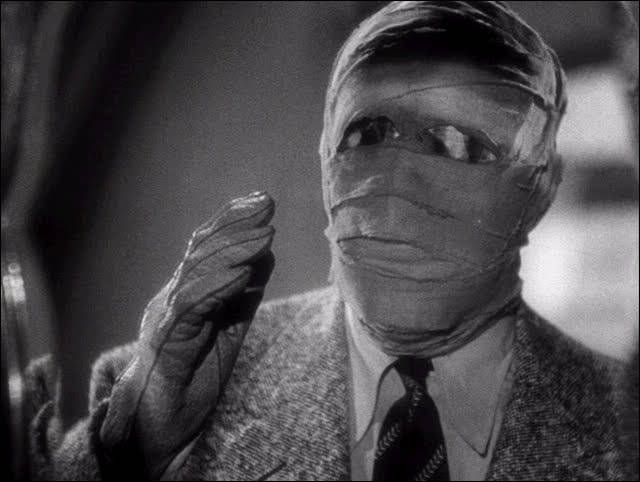
 

Contrast in Pacing in Avengers: Infinity War and Endgame

Spoilers for the highest grossing movie of 2018 and the highest grossing movie of 2019 herein.

Roughly two years ago when Avengers: Infinity War hit theaters, the most repeated criticism of its big genocidal ending came to life; that because we knew the characters that died would come back, the ending was irrelevant, fraudulent, manipulative, and so on.

Roughly one year after that, I argued otherwise.  I made a few arguments, but the one most relevant to the one you’re (theoretically) reading right now is that these criticisms ignore the story being told.

“Infinity War is Thanos’ movie, Thanos’ snap; Endgame belongs to the Avengers. Thanos wins in Infinity War, placing the Avengers in a need for redemption in Endgame.

If you’re going to have two halves, they need to be individual, and they need duality. That Infinity War is telling its own story, which correlates with a second half is, frankly, what we should want from a two-parter.”

What I didn’t know at the time was how far this “individual yet dual” concept would go, and it goes so far as to affect the pacing. This can be found in two words:

Action, reaction.

Hitting The Ground Running

Infinity War starts and seldom stops.

The film opens by throwing us right into the action. We don’t see Thanos start attacking the Asgardian refugee vessel; it’s more or less over and done with. This intensity persists through the rest of the scene, with Thanos killing two characters close to Thor (Idris Elba’s Heimdall and Tom Hiddleston’s Loki).

This is consistent throughout the film; characters are constantly thrown into the action. Our heroes think they have the time to discuss/reflect on decisions, time they most certainly don’t have. Tony contemplates texting Steve, New York is invaded. Wanda and Vision debate whether Vision should go to New York, Vision is stabbed in the chest mid sentence.

The film does have downtime, but even this has a sense of urgency to it. Another (somewhat) common trope is this downtime occurring on a spaceship heading to an important location. An example of this is when Groot, Rocket and Thor are on their way to Nidavellir, and the latter two have a heart to heart about how little Thor has to lose. It also occurs earlier in the movie, when, on their way to find the reality stone, Gamora gives Peter the “I might need you to kill me” talk.

Additionally, their plan to save Vision and stop Thanos is a desperate, last minute scramble, one they don’t have the time to come up with a backup plan for. Blockbusters might throw a kink or two in saving the day; maybe the battery in the world saving machine died and Thor has to restart it with his lightning, or something.

Not here. Once Thanos’ minions attack Shuri’s lab, it’s all over for Vision. There’s no other decision to make, and no time to come up with another.

There’s little to no time to properly contemplate or react, because all it’s going to take is one moment for Thanos to change everything. They simply have to act.

Thanos’ Certainty 

This is all because Thanos knows what he’s doing, to say the least. He’s certain of his decision, his plan, and now that he has a means of getting each stone, he hits the ground running. Thanos is strong, both mentally and physically, and he’s, above all, certain.

These attributes, as well as the film’s pacing being used to reflect them, are most effectively reflected in his sacrifice of Gamora on Vormir (the same can be said of its sister scene in Endgame, which I will get into). Once Thanos is told that he must sacrifice what he loves, the film cuts to an immediate reaction shot of Gamora. She thinks she knows Thanos, thinks she knows that he’s incapable of love, and is thus relishing in the moment of his supposed failure.

Thanos, too, is trying to stretch out a moment. He’s trying to avoid what he “has to do” for as long as he can.

Be it relishing or avoiding, they are both responding to a moment.

Vormir’s Mirror

When Natasha and Clint are informed of the same thing, on the other hand, there’s a time jump.

No instantaneous cut, no immediate understanding of what needs to be done; they have to come to the realization. Unlike the certainty of Thanos’ decision and realization, they….disagree over who should be the one to make the sacrifice.

Endgame’s Reaction

In further contrast, unlike Infinity War‘s opening scene, where we’re thrown into a conflict, Endgame opens with a a family picnic. Granted, it’s one being rudely interrupted by intergalactic genocide. But the following scene shows Tony and Nebula, post intergalactic genocide, playing paper football.

These scenes establish the slower, more reflective pace that will permeate the film. What’s particularly interesting about them is there’s still an urgency in the narrative in these opening scenes. For one, they’re stranded in space and need to get back home, thus continuing Infinity War‘s trope, and they eventually try to undo Thanos’ snap.

When they eventually get back to Earth, they reconvene and make the (relatively) instantaneous decision to go after Thanos, get the stones, and reverse the snap. It’s the simplest and most logical reaction. Unfortunately, Thanos also had the simplest and most logical reaction and snapped again to reduce the stones to atoms, leaving them with nothing.

And so five years pass, allowing us to see how everyone’s reacted to Thanos’ snap. Everyone has different reactions, and will thus react differently to the eventual opportunity to finally change things. Tony and Thor in particular need proper motivation to partake in saving the universe. Thor doesn’t want to confront the trauma and failure he’s been running from for five years, whereas Tony doesn’t want to lose the family life he now has.

The point here is that the characters have to make the decision to save the world on their own terms. They’re not thrown in the action the way they are in Infinity War, there are no conversations being cut off by impalements with alien spears, they have to initiate the action themselves.

And when they do initiate the action themselves, they take their time. Unlike the last minute nature of trying to save Vision, in which they have to book it to Wakanda after coming up with it, we get sequences of our heroes studying. One of my favorite images in the movie is of Tony, Natasha and Professor Hulk all lying down as they come to an important realization about when and where to find three of the stones.

They’re lying down because they’re taking their time. They have all the time in the universe. 

The Only Way

This contrast is essential to the entirety of both stories, individually and totally. It’s because of the prior, relentless conflict of Infinity War that the necessity of reflection and coming to terms with their faults becomes realized.

It’s also intentionally reflected in Endgame‘s use of time travel. There’s the fact that they can access any time in history, but this is compounded by the point they return to; the point in time in which they start their time travel mission and end is exactly the same. This is about them taking control of, taking back the momentary, instantaneous nature of Infinity War.

It’s also reflected in the death of Tony Stark. Last year when I wrote about Infinity War I argued:

“I’ve heard it argued that Tony’s death has been telegraphed too hard for him to actually die in Endgame. Thanos almost killing him in Infinity War, him waiting to die in midst of space in the trailer, etc.

If Tony dies, what I think this telegraphing means is that death is not something that is going to just happen to Tony.

He’s not going to be killed, he’s not going to just die because he ran out of food and water.

It’s going to be a choice he has to make.”

And so it was. Death wasn’t thrust upon Tony, it was never going to be an action that he was thrown into. In Endgame, he had to choose to join the fight, and he had to choose to die.

As such, they could never beat Thanos in this instantaneous fight, without reflection on who they are and why they’re doing this. They could never do it as they were and just acting.

They had to react. And so they did.